WhatsApp
We are Online
Click here
We are professional manufacture of food extruding lines


Date: 2026-01-09 Categories: Blog Views: 15679
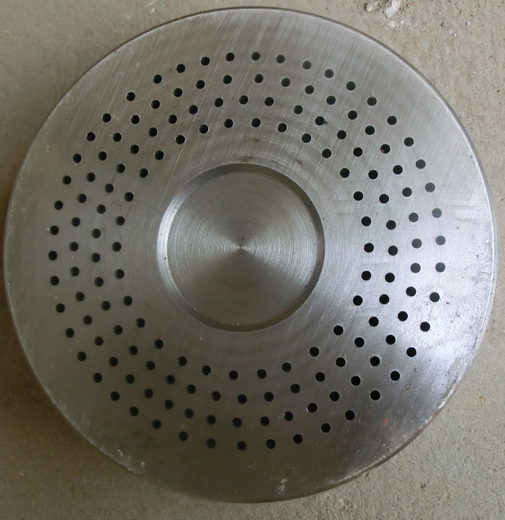
The core difference between molds for floating and sinking fish feed lies in the design of the die flow channel, compression ratio, hole formation/venting structure, and heating/cooling system. These molds must be highly compatible with the twin-screw extruder's screw configuration, temperature/pressure profiles, and formulations. Floating feed molds are primarily puffing heads (with venting/hole formation), while sinking feed molds use compact heads (high compression/low temperature). These molds are not interchangeable.
The main advantage of the twin-screw extruder is its high conveying capacity, shear force, precise temperature/pressure control, and continuous production. The mold (die) is the terminal component that achieves "particle shaping and density control":
Key Premise: The screw configuration (conveying, shearing, kneading sections), temperature zones, and feeding rate of the twin-screw must be matched with the die parameters. Otherwise, particle formation and density will be uncontrolled.
| Parameter | Twin-Screw Sinking Fish Feed Mold | Twin-Screw Floating Fish Feed Mold (Puffing Die) | Core Impact (Twin-Screw Context) |
|---|---|---|---|
| Core Function | Dense forming, no air pockets, sinks immediately in water | Puffed forming, uniform air pockets, floats ≥30 minutes (National Standard) | Directly determines feed density and buoyancy |
| Compression Ratio (Die Flow Channel / Die Holes) | High (12:1–18:1, hard pellets); screw configuration: high compression section + compact die | Low (6:1–10:1, puffed pellets); screw configuration: shearing section + venting section + hole formation die | Higher compression results in denser pellets; low compression + venting aids in gas expansion |
| Die Flow Channel Design | Straight holes/micro-conical holes, no venting slots, smooth flow channels, no dead corners; die hole diameter: 0.8–4 mm | Step holes/funnel holes/ring-shaped venting slots, flow channels with guiding cones, die holes with grooves/closed holes; hole diameter: 1.5–6 mm | Venting slots discharge water vapor/gases, hole formation structures help expand the gelatinized feed, forming air pockets |
| Die Plate Material & Surface Treatment | Tungsten carbide/alloy steel, HRC60+; mirror-polished inner wall, resistant to high-pressure wear, suitable for low-temperature high shear | Stainless steel/alloy steel + nitriding treatment, HRC55–60; inner wall resistant to temperature and fatigue, suitable for high-temperature puffing (120–140°C) | Sinking die resists high-pressure wear; floating die resists thermal fatigue + caking |
| Heating/Cooling System | Low-temperature control (80–90°C), die with cooling water channels, preventing gelatinization and gas production | High-temperature control (120–140°C), die with heating rings + insulation layer, some with zoned temperature control; puffing section requires overheated steam assistance | Temperature directly determines starch gelatinization degree, which in turn affects air pocket formation |
| Formula Adaptation (Twin-Screw-Specific) | Low starch (15%–25%), high protein (30%–45%), high oil (8%–12%); moisture 12%–14% | High starch (25%–35%), medium protein (25%–35%), low oil (<8%); can add leavening agents/binders; moisture 14%–16% | Starch is the core ingredient for buoyancy; excessive oil will damage air pockets; high protein benefits density |
| Extrusion Parameters Match | Screw speed: 300–400 rpm, pressure: 6–10 MPa, low-temperature short extrusion | Screw speed: 400–600 rpm, pressure: 3–6 MPa, high-temperature long extrusion (with venting section) | Pressure/speed/temperature determine shear force and gelatinization degree |
Match Twin-Screw Parameters:
Confirm Mold Parameters:
Small Batch Trial Production:
| Problem | Sinking Feed | Floating Feed |
|---|---|---|
| Insufficient Density / Poor Buoyancy | 1. Increase compression ratio; 2. Lower granulation temperature; 3. Increase protein/oil ratio; 4. Adjust screw configuration to add shearing section | 1. Decrease compression ratio; 2. Increase granulation temperature; 3. Add more starch/leavening agents; 4. Increase venting slot area; 5. Adjust screw configuration to add venting section |
| Clogging of Die Holes | 1. Control raw material moisture (12%–14%); 2. Reduce fiber content; 3. Polish die holes; 4. Use anti-clogging molds (e.g., micro-conical holes) | 1. Control raw material starch purity; 2. Lower temperature to avoid caking; 3. Increase venting; 4. Use die holes with grooves to prevent sticking |
| Uneven Particles | 1. Adjust screw speed for uniform feeding; 2. Polish die holes; 3. Use smooth flow channel molds | 1. Adjust temperature zones for uniform gelatinization; 2. Add guiding cones for uniform flow; 3. Use step holes for even puffing |
Molds for twin-screw extruders in fish feed production are not "universal parts" but "customized components." For floating feed, prioritize low compression ratios, step holes, and ring-shaped venting slots for puffing dies, paired with high starch formulas and high-temperature venting processes. For sinking feed, prioritize high compression ratios, straight holes/micro-conical holes for compact dies, paired with low starch formulas and low-temperature high-pressure processes.

Jinan Eagle Food Machinery Co., LTD
Factory Display